Two weeks ago I was out on my long Sunday run, planning on running 15-18 miles I started getting some pain in my lower abdomen. So thinking this was a side stitch or something minor I managed to deal with the pain until about mile 13. For the next four days the pain became something that could be best described as mild cramping or tightness in my lower mostly right abdomen. I went through the next few days trying to think of all the typical possibilities one might have like a virus, constipation, heart burn, etc. Over the next 4 days the problem at times got worse. As far as working out that became very difficult, I was very tired and my Heart rate was 15-20 beats higher than it should be. The following day I went to the Doctor, my doc was out on vacation so I saw someone else. He was at a loss and said you might have caught a simple virus or something and I suspect it will clear within a week. So I decide not to do anything but rest. Saturday, after resting for two days, I went out to ride with my normal group and things were even worse, I struggled all day and decided to cut it short at about 55 miles. When I got home I felt like I had been hit by a truck or something. Sunday I got on the computer and started researching all my symptoms again. What I found out was there are about a million things that could be wrong. At this point I was getting emailed from some of my training partners asking... What is the problem? Alisha lions having difficulty with determining a food allergy problem encouraged me to educate myself on everything I could via the Internet and to try and determine the problem by not only talking to the Doctor but cutting out things in my diet that may cause issues. Bottom line collect as much information as you can and try to eliminate as many things as you can. Abdominal pain is one of the toughest things for Doctors to diagnose. Alisha said ... You have to stay on these Doctors and don't let them tell you nothing is wrong. At this point I was down to roughly 4 weeks before my next Ironman race. I was supposed to be hitting everything hard one last time before starting my taper. I was getting very depressed thinking my race may be over unless I can figure this thing out quick. A few more days go by and no improvement, in fact it got worse. I call my regular Doctor and we talk about my blood work etc. nothing there to say anything is wrong either. He gives similar advice... to just rest a couple more days but to call mid week if the problem persist. The next day another good friend tells me not to worry, Nas explained, you already have your fitness, just figure this stomach thing out and you will have 3 weeks left which is a lifetime to do your final prep. She had experienced a similar "life hurdle" last year after being hit by a truck only two months before Lake Placid IM. This helped me regain perspective and I hit the research again. Determined to figure this out, I made another appointment with the Doctor. I wanted to provide him as much info as possible this time around. I decided the best way for me to do this was to force myself to go run. This may sound sort of crazy but when I run I am very in tune with my body and can feel anything that is not right. I can gain just a pound or two and I know it, any little problem I can instantly determine where it is and generally correct it. I pushed myself to run 4 miles at an 8 minute pace, normally that would be a walk in the park. I was spent at the end with my heart rate anaerobic like I was sprinting. I determined exactly where the pain was in my abdomen and proceeded to the doctor that afternoon. Luckily my Doctor is a pretty smart guy and actually "listens" to his patients. He asked me to explain everything from the very beginning, I did and added all the research I had done as well as all the things I had already tried; focusing on the abdomen pain and my elevated heart rate. I told him I thought I had some sort of GI infection. He ask a few more questions, did some examinations to make sure he knew exactly where the pain came from and then diagnosed me with diverticulosis. (Infection in the large intestine) Many people have small pouches in their colons that bulge outward through weak spots, like an inner tube that pokes through weak places in a tire. Each pouch is called a diverticulum. Pouches (plural) are called diverticula. The condition of having diverticula is called diverticulosis. About 10 percent of Americans over the age of 40 have diverticulosis. The condition becomes more common as people age. About half of all people over the age of 60 have diverticulosis. Sometimes these pockets get infected and if not treated can become quite serious. Lucky for me, I caught it early on. My doctor prescribed some antibiotics (Avelox) on Thursday and said I should feel much better on Saturday. He gave me strict instructions to call him on Saturday if I was not getting better. Friday came and I felt twice as bad , so I looked up and found the antibiotics I was taking and found it "can" have some nasty little side effects for some people but nothing too serious, so this was probably the extra bad feeling I was getting now. Saturday came and almost like magic I started feeling much better. Not great, but much better than before. I knew (hoped) at this point the antibiotics were working and the diagnosis was probably correct. I decided it best not to do anything strenuous and just rested all day. I wanted to make sure I got this thing nailed early on without any relapse. Sunday came and I felt even better, so I went out for an easy 25 mile bike ride. All went pretty well, but I felt real weak, like I had been sick :-0. At this point I have 3 weeks before Ironman Louisvlle and my plan is to slowly build my volume and effort through this week hopefully ending the week on Sat/Sun with normal workouts where I feel strong again. Provided that goes well I will then figure out some sort of 2 week taper. I was off sick with no exercise for approx 11 days. Wow did that suck, just another one of those "life hurdles" that you have no control over. I am back training now and started feeling much better, not nearly 100% but hopefully by the end of the week I will be back at 100%. One last thing I noticed when I started feeling better. It was a big change and I only realized then, just how tired and bad I was really feeling. I guess we get used to a certain amount of pain and tired feelings due to our training and thus our thoughts about what is "normal" is much different than non athletes. The next time the Doctor ask me if I am tired, I think I am just going to say YES, because I probably am, but just do not really know I am. Weird!
Lessons learned:
Have a good doctor (I do!) One that listens to you. Research your symptoms on your own via the internet when something like this comes up. As a triathlete you know much more about your body than your doctor does. If you think something is VERY wrong (like I did) it most likely is. Looking back on it, I knew almost instinctively that something was different and wrong. If he is a good Doctor, he will gladly embrace you doing this and recognize your efforts. My doctor said... "Jerry if all my patients did their homework like you did, my job would be pretty easy." Be persistent, but respectful, Doctors are smart and know a lot, but don't be scared to question EVERYTHING they recommend to you. Make them educate you on the diagnoses and how they arrived at this conclusion as well as all the possible options you have for treatment. Again, if they are any good at all, they will appreciate this feedback and the desire for education. Too many Doctors these days are in too much of a hurry and treat people like a number. If you find your doctor doing this, find a new Doctor ASAP, BEFORE you have a problem.
Thanks Alisha and Nas for keeping me focused and headed in the right direction.
Saturday, August 4, 2007


Monday, July 16, 2007
Louisville IM 2007
My second IM this year will be the inaugural Louisville Ironman on August 26th. My first was the in Arizona earlier this year. What did I learn about running a full distance Ironman? I learned plenty, I learned most of all that anything can happen on race day. So all you can do is train the best you can, plan the best you can and try not to worry about the things you have no control over. My training has been a progression from being pretty unfit just 3 years ago to Ironman ready this year. The ONE thing that has the most effect on your training is consistency and I have been very good at that over the past 3 years. In addition, I have learned a lot about how to train my body for Ironman events. I prefer to educate myself on these types of things verses getting a coach and/or following a written plan. Don't get me wrong, I see nothing at all wrong with that approach, in fact it is a VERY smart way to go and I did briefly use a swim coach to help me with some fundamentals. I just like the challenge of learning that side of the sport as well. Even though I do not have a coach, I have learned plenty from other friends and people I have met over the last 3 years. I have learned all sorts of cool stuff from my roadie bike friends that have enabled me to become a better cyclist. I took 3 months worth of specific swim coaching because I have no swim background and it was a huge weak spot for me. That was VERY beneficial for general stroke technique etc. I have friends like Dan and Brett that I have received documents, articles and general tips on training from. But most of all I have my biggest fan, my wife whom has just been unbelievably supportive in my Ironman ventures. Without her I would not be an Ironman. My race in Arizona did not go as I wanted, but I finished the race and I can always say I am an Ironman. With out a doubt an accomplishment I am proud of. But I am a goal oriented person and sometimes I set the bar pretty high for myself (Never anyone else) just me! So what are my goals in Louisville. Race well, that is it! I know what I am capable of and I know what my training tells me I can do . I just need to go do it. It is that simple and I plan on giving myself every opportunity to do my best by meeting all my training goals and planning very well for the race. On race day, I will execute my plan and everything that is out of my control I will simply improvise and do the best I can - just like everyone else. I have always raced my best races when I tried to keep things simple. Many times in my previous races I would occasionally repeat to myself - Smooth is fast Fast is smooth. It is a great saying and very true in this sport. It enables me to focus on the task at hand and when I do that I tend to go pretty fast. Ironman emboldens ones confidence beyond anything else I know. Confidence to conquer a task that most see as crazy or impossible is very powerful weapon to own for the rest of your life. So get ready Louisville, because I will be there soon and I will be ready.
Thursday, July 5, 2007
What did you do on the 4th?
Well I hope your 4th was as good as mine. It started with perfect weather, you just could not ask for a nicer day, lots of sunshine, 85 degrees and little humidity makes for a perfect summer day. I rode the firecracker ride, a charity ride that I have done a couple of years now. Best part, as always are the people, I am so lucky to have such good friends who share my passion of Triathlon and most of them showed even after racing a full Ironman just a week ago. Sometimes I think these people are just super human, they are certainly super people! After training very hard myself through the winter and spring I am now getting close to my second Ironman race in Louisville and I was due for a much needed recovery week. My recovery week consist of a LOT less volume of training, probably 30% of what I normally do as well as less intensity. I was already starting to feel much better after starting this on Monday of this week and doing nothing for two days. (I had been hitting it pretty hard and the body said ENOUGH!) So I listened to my body and backed off. One thing I have learned is... when it is time for recovery you need to go VERY VERY easy. Most people go more like medium claiming to be in recovery, NOT good. Your body never really goes into deep recovery mode and thus when it is time to work hard again you will not have a new foundation to work to a higher level. I think people do this out of fear, fear that if they back off too much they will lose what they have gained. How wrong they are, you would literally have to do nothing for a solid two weeks to see that start to happen. So trust your training and take a much needed break, that is the lesson. I heard one coach say... One of the big difference between age group athletes and the pros is the pros go VERY VERY easy (Of course everything is relevant) on their recovery days and the age group athletes do most of their workouts at medium intensity. They do not recover at an easy enough intensity and they do not go hard enough when it is time to go hard. The examples he was using were easy recovery days verses hard intervals like track work etc. Most age groupers do too long of a session and thus cannot push as hard at the high end but instead opt to go longer. A good example of this is many of the bikers I see and ride with do longer rides and insert VERY high end surges into the ride to simulate a race condition, even though most of them do not race - they "think" this is the ticket to getting faster and there is "some" truth to this. I am not a "roadie" and I have never raced a bike road race but I think they might be better off following some of this same advice from this coach. I think they would do much better doing either a long easy ride, purely for endurance or a long endurance ride with big gear work for muscular endurance inserted periodically into the ride. Save the all out interval work for shorter rides and during the intervals go as hard as you can, recover fully and do it again. I know this has helped my cycling a lot over the past few years so I do not see how Tri would be "that" much different. The main reason explained the coach to not doing extended interval work is that it simply produces very little on the upside and on the downside just causes a longer recovery time between workout sessions to occur. Instead of better high end anaerobic work, you end up with a longer recovery interval because you went out and basically trashed yourself. Believe it or not a 30 minute track session of very hard intervals like 400 repeats etc. is all you need for your body to start waking up the anaerobic engine. A time trial of 8-10 miles, again plenty of high end work or maybe 30 minutes of sprinting in the hills followed by a recovery interval that is equal to half the work interval. More than that just causes a longer recover time before you can work again.
Ok, so back to the ride - we chose the 50k option, yes 30 something miles and we rode at a ridiculously slow pace. That is recovery the way it should be done - we did a short easy run afterwards but to be honest that was very easy as well and just kind of for fun. Personally, I wanted to see how well a couple of people could run that I had never run with and I got my answer.
Best part of all, I saw so many people I knew out riding and it is always great to get out and share the day with such wonderful people. My wife showed up for the luncheon afterwards where we shared more conversation, drink, food and laughs.
I hope your 4th was as good as mine.
Ok, so back to the ride - we chose the 50k option, yes 30 something miles and we rode at a ridiculously slow pace. That is recovery the way it should be done - we did a short easy run afterwards but to be honest that was very easy as well and just kind of for fun. Personally, I wanted to see how well a couple of people could run that I had never run with and I got my answer.
Best part of all, I saw so many people I knew out riding and it is always great to get out and share the day with such wonderful people. My wife showed up for the luncheon afterwards where we shared more conversation, drink, food and laughs.
I hope your 4th was as good as mine.
Wednesday, June 27, 2007
Race Simulation
So how many race simulation workouts have you done? For most, like me, that would be a big fat ZERO! Somehow I guess we just think we can determine pace like we always have in shorter races.In my first Ironman this year, this is exactly what I did. The plan goes something like this...I want to swim X minutes, bike about such such an average and run X minutes per mile. This has certainly worked in the past and I think for shorter course Tri it is probably fine. I know I got where I could predict my short course times pretty closely last year, even my Half IM distance races. However, since I started training for a full distance IM, I have learned a FULL distance IM is nothing like any other race. You train differently and you have to "think" when you race.
Well, think about it, do you really think you can simply say, OK I am going to try and average 20.5 on the bike for a 112 mile ride. Here are the factors that make that next to impossible. You could swim too hard due to rough conditions or poor pacing, the wind could be howling at 20+, the course could be hillier than you realize, the temp could be unexpectedly hot or cold on race day. Bottom line, you have to race no matter what race day brings, so how do you learn to judge your pace correctly? I have been reading many articles about race pace training and everyone seems to suggest it, but few actually do it. So I decided this weekend I would try just that. Here is my plan for the weekend.
Saturday - I will ride about 65 miles with my normal "roadie" group and do "some" work at the front but simply try to get in some good work but make sure I do not trash myself for the next day.
Sunday - I have roughly a 30 mile loop marked. I will ride the loop 3 times with a stop after each loop just long enough to grab nutrition. Dan, one of my training buddies is planning on joining me (maybe I can talk someone else into this madness before then). NO drafting allowed, ride side by side when possible but no drafting. I plan on riding this like I would the race. First lap VERY easy, drink and eat more on this lap. Heart rate goes no higher than zone 2. Lap two pick up the pace to "steady tempo" which is zone 2 reaching into zone 3. Lap 3 I will push a little when I feel good but mostly steady with "some" upper steady zone 3 and possibly 4. Hills do not exceed 155bpm (That HR is for me, others will be different). Bottom line you should still feel pretty good when you get off the bike, remember you have to run a marathon on race day.
Once I have completed the bike I will transition no longer than 5 minutes to a 1 hour run, 2 x 30 min loops. Again hitting nutrition between loops.
Here are my goals for the workout:
1. Learn how to pace the distance BEFORE race day.Try to negative split the bike and run.
2. Learn pace by Heart Rate and Effort, NOT average speed - the average speed will be what the average speed is due to conditions beyond my control.
3. Run off the bike for 1 hour and see what my Heart rate does and what pace that translates to. This is the "real" test, seeing what effort I can actually do on the bike and how that translates to the run.
I would love to have a power meter to add to my data, but plenty of people did Ironmans long before the invention of a power meter so I should be fine.Not to mention those things aren't exactly cheap!
There are plenty of things that are not accurate with this test such as, the course is NOT the one I will be racing on, the conditions will not be exactly the same and most of all I have been hitting the training pretty hard for a few weeks now and I may be getting tired, but I have a recovery week planed for next week. Race day I will be all tappered up and feeling great. However, with all that said, my EFFORT should not change that much. For example: if I can hold X Heart rate over the chosen distance and I am tired then holding that same effort on race day when I am fresh will simply translate into a faster average. Therefore, the test helps you gauge your effort better on the bike while still understanding you have to run a marathon after the bike. How much difference can this make? A whole lot. If you back off the bike say 5 - 10 minutes you "could" actually easily make that up and then some on the run. So that is the idea and the plan. The other HUGE win with this type of workout is determining how much nutrition you can actually absorb per hour. The average is 200 - 500 calories but everyone is different and if you go too hard you will shut your stomach down and your race is over.I have also recently read that it is important to eat when you are not working as hard. One of the lines in the article said... When you feel good don't go harder EAT!
There is some good proof for the pacing argument in the recent CDA Ironman. I went out and looked at the results for my age group almost no one negative split the bike or run but the top 5 guys appeared to do the best job riding and running steady across all distances. You can clearly see where many of the top 15 guys have a bike split that is anywhere from 2 - 10 minute slower than the top 3 competitors, however their marathon time is anywhere from 20 - 40 minutes slower. I guess you "could" say they may not be as good a runner but I suspect the answer is... they probably went too fast on the bike. If they would have eased off just 5 minutes on the bike they may have picked up 10 minutes on the run. Is this easy - no way, but the better you get at the pacing game and the steadier you can ride and run the distance the better result you will most likely have. Anyway that is what all the so called "experts" say - ME not included! Anyway that is my goal for the weekend and I plan on doing 1 or two more of these before Louisville. I also plan on a swim / bike brick before Louisville as well. I will have to figure out how to do that one.
If nothing else I am sure I will learn something and still get in about 150 miles of riding this weekend and probably 8 or so running. Certainly cannot complain about those numbers.
Well, think about it, do you really think you can simply say, OK I am going to try and average 20.5 on the bike for a 112 mile ride. Here are the factors that make that next to impossible. You could swim too hard due to rough conditions or poor pacing, the wind could be howling at 20+, the course could be hillier than you realize, the temp could be unexpectedly hot or cold on race day. Bottom line, you have to race no matter what race day brings, so how do you learn to judge your pace correctly? I have been reading many articles about race pace training and everyone seems to suggest it, but few actually do it. So I decided this weekend I would try just that. Here is my plan for the weekend.
Saturday - I will ride about 65 miles with my normal "roadie" group and do "some" work at the front but simply try to get in some good work but make sure I do not trash myself for the next day.
Sunday - I have roughly a 30 mile loop marked. I will ride the loop 3 times with a stop after each loop just long enough to grab nutrition. Dan, one of my training buddies is planning on joining me (maybe I can talk someone else into this madness before then). NO drafting allowed, ride side by side when possible but no drafting. I plan on riding this like I would the race. First lap VERY easy, drink and eat more on this lap. Heart rate goes no higher than zone 2. Lap two pick up the pace to "steady tempo" which is zone 2 reaching into zone 3. Lap 3 I will push a little when I feel good but mostly steady with "some" upper steady zone 3 and possibly 4. Hills do not exceed 155bpm (That HR is for me, others will be different). Bottom line you should still feel pretty good when you get off the bike, remember you have to run a marathon on race day.
Once I have completed the bike I will transition no longer than 5 minutes to a 1 hour run, 2 x 30 min loops. Again hitting nutrition between loops.
Here are my goals for the workout:
1. Learn how to pace the distance BEFORE race day.Try to negative split the bike and run.
2. Learn pace by Heart Rate and Effort, NOT average speed - the average speed will be what the average speed is due to conditions beyond my control.
3. Run off the bike for 1 hour and see what my Heart rate does and what pace that translates to. This is the "real" test, seeing what effort I can actually do on the bike and how that translates to the run.
I would love to have a power meter to add to my data, but plenty of people did Ironmans long before the invention of a power meter so I should be fine.Not to mention those things aren't exactly cheap!
There are plenty of things that are not accurate with this test such as, the course is NOT the one I will be racing on, the conditions will not be exactly the same and most of all I have been hitting the training pretty hard for a few weeks now and I may be getting tired, but I have a recovery week planed for next week. Race day I will be all tappered up and feeling great. However, with all that said, my EFFORT should not change that much. For example: if I can hold X Heart rate over the chosen distance and I am tired then holding that same effort on race day when I am fresh will simply translate into a faster average. Therefore, the test helps you gauge your effort better on the bike while still understanding you have to run a marathon after the bike. How much difference can this make? A whole lot. If you back off the bike say 5 - 10 minutes you "could" actually easily make that up and then some on the run. So that is the idea and the plan. The other HUGE win with this type of workout is determining how much nutrition you can actually absorb per hour. The average is 200 - 500 calories but everyone is different and if you go too hard you will shut your stomach down and your race is over.I have also recently read that it is important to eat when you are not working as hard. One of the lines in the article said... When you feel good don't go harder EAT!
There is some good proof for the pacing argument in the recent CDA Ironman. I went out and looked at the results for my age group almost no one negative split the bike or run but the top 5 guys appeared to do the best job riding and running steady across all distances. You can clearly see where many of the top 15 guys have a bike split that is anywhere from 2 - 10 minute slower than the top 3 competitors, however their marathon time is anywhere from 20 - 40 minutes slower. I guess you "could" say they may not be as good a runner but I suspect the answer is... they probably went too fast on the bike. If they would have eased off just 5 minutes on the bike they may have picked up 10 minutes on the run. Is this easy - no way, but the better you get at the pacing game and the steadier you can ride and run the distance the better result you will most likely have. Anyway that is what all the so called "experts" say - ME not included! Anyway that is my goal for the weekend and I plan on doing 1 or two more of these before Louisville. I also plan on a swim / bike brick before Louisville as well. I will have to figure out how to do that one.
If nothing else I am sure I will learn something and still get in about 150 miles of riding this weekend and probably 8 or so running. Certainly cannot complain about those numbers.
Wednesday, June 13, 2007
Lose a pound or two!
I found a really good article about estimating calories burned – it is VERY technical, but I think some of you like that. Here is the take away from the article:
So what I would do, when I was watching this stuff closely, is use these calorie calculations as an estimate. I would take the most conservative one and then take off another 15-25%. Then I would watch the trend over the long run (say 1-2weeks) and I would see if the calorie deficit I was supposedly creating was really translating into lost weight. A 3500 calorie deficit should translate to 1 lbs of body weight.
Here is the full article:
Interesting enough, I used to think the scale I had at home was wrong, I have one that shows body fat% and water weight etc. I also used to think BMI was wrong or maybe wrong for me. I do not have Calipers and I have never been dunked in water for a % body fat test. I did use one of the “measurement” methods online to calculate body fat and compared this to my scale, as well as compared that scale to an older scale I have at home AND even the triple beam scale like the one in the locker room here at Duke.
Bottom line… all of this says almost exactly the same thing, simply put my calculations for how many calories I thought I was burning was NOT correct. In hind sight and after reading this article it was kind of a “Duh” moment. If you are cutting your calorie intake by roughly 3,500 calories per week in an effort to lose weight (roughly a pound a week) and you actually gain or do not lose after “closely” monitoring this for 2-3 weeks, your calculations MUST be wrong somewhere. They were for me! In addition, I had to figure out what caused my hunger and what foods gave me the energy I needed to train. It is as important or more important to eat the right things AND limit portion size not just cut calories. Now do not get me wrong, I HAVE been doing this for a while and with some success – just not correctly in many ways! What I was doing was not bad, in fact I eat VERY healthy as compared to my non-tri friends and my weight is not bad just not optimum for racing. I suspect I simply learned a little more about nutrition and lot more about ME and nutrition as we all do over time if we keep at it.
This started when I realized I actually went into The Arizona IM at 170+ somehow convincing myself this was added muscle I put on over the winter - :-o Nice Try!
Last year I raced my best race down in Cancun and weighed about 162 – 164. I have been watching this closely and really working at this and I am now at 160 with a race goal weight of 155. With 11 weeks to go until IM Lousiville I wanted to make that weight loss, make sure I could hold it easily and then have full “tanks” of fuel to train very hard in the last few weeks. It appears I am on track to do just that. Again from my reading, the experts say to try to lose the weight early during BASE, BEFORE your more intense training kicks in. 155lbs would not even be close to SUPER lean according to everything I read and according to BMI. As I have done this, I have not felt MORE tired but LESS tired (Part of the formula is eating not only less but the right food as well). Believe it or not when I get to 155lbs I estimate my body fat will still be 12% while maintaining the NEW muscle I put on in the winter. It is just a number though and what really matters is how you feel, are you healthy and does it help performance. I believe all will be there in the end.
A few of the key elements that worked for me was realizing I did not need the amount of food I thought I did for training. I would feel tired and think - well I am training a lot more now and I must need more carbs, more food etc. No, I was simply tired from training, my food intake was fine, I needed more rest. I had to figure out a better recovery interval, a better way of structuring my workouts so that I got just enough recovery before my next workout. In addition, I simply eat a LOT more vegetables through salads at lunch and cut the fat where I can, like dressings, spreads, jams, jelly, dairy etc. Finally, things high on the GI scale really affect me, probably more than some, so I cannot eat cereal in the morning with raisins. Raisins are simply loaded with carbs and good for you, but also very high on the glycemic index (GI). I could take some protein to counter act this, but I chose to just change my cereal choice. High GI food will have you eating an hour later and you generally crave the wrong types of food only making the problem worse. So watch the GI thing very closely.
Another bit of information that really captured my attention was something I read “somewhere”? For every pound of fat you lose this enables you to run 2 seconds faster per mile. Sure does not sound like much, until you add up the miles for a half or full marathon. When you see how it affects climbing on the bike, the results are simply unreal. I can see in my training this working in both my running and my cycling so that is very rewarding to see the pay off. Gordo is probably right many Pros are probably in a state of starvation but many age groupers are simply overweight or could certainly lose a few pounds that can have HUGE affects on performance both in training and racing. The trick is to figure out how EACH person makes this happen – one way to start I found was… you have to be honest with yourself first and if what you are doing is not producing results, then something MUST be wrong. The scale, the body fat % measurement and the BMI is probably not wrong – your burned calorie calculations and/or the amount of food or types of food you are eating is probably the actual problem.
In summary:
Calculate calories burned - conservatively!
Make sure your calculations are matching up with your weight loss results and goals.
Eat healthy by eating more vegetables and less pasta and high GI foods.
Only use gels, sports drinks and bars for workouts - these are "high test fuel" use them conservatively!
Eat at least two healthy snacks a day between meals, never starve yourself, never skip a meal and always eat breakfast.
Give yourself a treat now and then like low fat ice cream but try to make sure you eat a full meal first with a LOT of veggies and/or a salad.
Finally look in the mirror! - that is right, look in the mirror! If you look better, leaner, more healthy - you probably are!
One last benefit from eating well; I like a lot more foods than I used to and enjoy more variety than ever before.
So what I would do, when I was watching this stuff closely, is use these calorie calculations as an estimate. I would take the most conservative one and then take off another 15-25%. Then I would watch the trend over the long run (say 1-2weeks) and I would see if the calorie deficit I was supposedly creating was really translating into lost weight. A 3500 calorie deficit should translate to 1 lbs of body weight.
Here is the full article:
Interesting enough, I used to think the scale I had at home was wrong, I have one that shows body fat% and water weight etc. I also used to think BMI was wrong or maybe wrong for me. I do not have Calipers and I have never been dunked in water for a % body fat test. I did use one of the “measurement” methods online to calculate body fat and compared this to my scale, as well as compared that scale to an older scale I have at home AND even the triple beam scale like the one in the locker room here at Duke.
Bottom line… all of this says almost exactly the same thing, simply put my calculations for how many calories I thought I was burning was NOT correct. In hind sight and after reading this article it was kind of a “Duh” moment. If you are cutting your calorie intake by roughly 3,500 calories per week in an effort to lose weight (roughly a pound a week) and you actually gain or do not lose after “closely” monitoring this for 2-3 weeks, your calculations MUST be wrong somewhere. They were for me! In addition, I had to figure out what caused my hunger and what foods gave me the energy I needed to train. It is as important or more important to eat the right things AND limit portion size not just cut calories. Now do not get me wrong, I HAVE been doing this for a while and with some success – just not correctly in many ways! What I was doing was not bad, in fact I eat VERY healthy as compared to my non-tri friends and my weight is not bad just not optimum for racing. I suspect I simply learned a little more about nutrition and lot more about ME and nutrition as we all do over time if we keep at it.
This started when I realized I actually went into The Arizona IM at 170+ somehow convincing myself this was added muscle I put on over the winter - :-o Nice Try!
Last year I raced my best race down in Cancun and weighed about 162 – 164. I have been watching this closely and really working at this and I am now at 160 with a race goal weight of 155. With 11 weeks to go until IM Lousiville I wanted to make that weight loss, make sure I could hold it easily and then have full “tanks” of fuel to train very hard in the last few weeks. It appears I am on track to do just that. Again from my reading, the experts say to try to lose the weight early during BASE, BEFORE your more intense training kicks in. 155lbs would not even be close to SUPER lean according to everything I read and according to BMI. As I have done this, I have not felt MORE tired but LESS tired (Part of the formula is eating not only less but the right food as well). Believe it or not when I get to 155lbs I estimate my body fat will still be 12% while maintaining the NEW muscle I put on in the winter. It is just a number though and what really matters is how you feel, are you healthy and does it help performance. I believe all will be there in the end.
A few of the key elements that worked for me was realizing I did not need the amount of food I thought I did for training. I would feel tired and think - well I am training a lot more now and I must need more carbs, more food etc. No, I was simply tired from training, my food intake was fine, I needed more rest. I had to figure out a better recovery interval, a better way of structuring my workouts so that I got just enough recovery before my next workout. In addition, I simply eat a LOT more vegetables through salads at lunch and cut the fat where I can, like dressings, spreads, jams, jelly, dairy etc. Finally, things high on the GI scale really affect me, probably more than some, so I cannot eat cereal in the morning with raisins. Raisins are simply loaded with carbs and good for you, but also very high on the glycemic index (GI). I could take some protein to counter act this, but I chose to just change my cereal choice. High GI food will have you eating an hour later and you generally crave the wrong types of food only making the problem worse. So watch the GI thing very closely.
Another bit of information that really captured my attention was something I read “somewhere”? For every pound of fat you lose this enables you to run 2 seconds faster per mile. Sure does not sound like much, until you add up the miles for a half or full marathon. When you see how it affects climbing on the bike, the results are simply unreal. I can see in my training this working in both my running and my cycling so that is very rewarding to see the pay off. Gordo is probably right many Pros are probably in a state of starvation but many age groupers are simply overweight or could certainly lose a few pounds that can have HUGE affects on performance both in training and racing. The trick is to figure out how EACH person makes this happen – one way to start I found was… you have to be honest with yourself first and if what you are doing is not producing results, then something MUST be wrong. The scale, the body fat % measurement and the BMI is probably not wrong – your burned calorie calculations and/or the amount of food or types of food you are eating is probably the actual problem.
In summary:
Calculate calories burned - conservatively!
Make sure your calculations are matching up with your weight loss results and goals.
Eat healthy by eating more vegetables and less pasta and high GI foods.
Only use gels, sports drinks and bars for workouts - these are "high test fuel" use them conservatively!
Eat at least two healthy snacks a day between meals, never starve yourself, never skip a meal and always eat breakfast.
Give yourself a treat now and then like low fat ice cream but try to make sure you eat a full meal first with a LOT of veggies and/or a salad.
Finally look in the mirror! - that is right, look in the mirror! If you look better, leaner, more healthy - you probably are!
One last benefit from eating well; I like a lot more foods than I used to and enjoy more variety than ever before.
Tuesday, May 22, 2007
Perfect Day for a long ride
So what makes a perfect day for a long ride? Good weather is a must, this past Saturday was pretty good, starting out a bit on the chilly side but warming up quickly into the lower 80s by mid day. A few Tri buds and I decided to put in some serious miles doing 120 miles on a moderate to hilly course. After about 6 hours in the saddle you certainly know you got a good workout. Wearing my GPS Garmin 305 gave me some nice stats for the route such as distance, average speed, elevation but more importantly showed I was working almost all day in the right zones for good IM training. The bulk of the ride I spent in zones 1 and 2 with probably 70 minutes of moderate to hard work in zone 4. It really does not get much better than that for a training ride. Many times riding with my roadie friends, the ride turns into a hammer fest and I am forced to simply let them ride away if I want to train correctly. It was nice to ride with other people training for CDA IM that were interested in keeping a steady and smooth tempo ride, not pushing too hard, thus not going anaerobic; gradually building speed down the hills, again keeping heart rate within check. Flats is where you can just tuck down on your bars and ride a steady or upper steady pace. Do one of those a week for a while and you will be bike ready for IM!
Monday, May 14, 2007
Open Water Swims
Finally the water is getting warmer and I have been able to get out and do some open water swimming. Still need a wet suit, but that will not last much longer since the days are getting warmer now. What do I like about open water? No flip turns, just cruise along, get in a steady rhythm and work in some stronger ME intervals within the swim. Swimming with a new group of people this year on lake Jordon a well protected cove with little or no boat traffic and a loop measuring about 1400 yards. Do about 3 laps of that and you have a nice long swim workout. Should work well for getting me ready for Louisville in August.
Friday, April 20, 2007
ALS Warrior needs your help
As some of you may already know, I have been racing Triathlons over the past 3 years. Last weekend I just completed my first full distance Ironman race. A grueling endurance event that consist of a 2.4 mile swim, a 112 mile bike and a 26.2 mile marathon. It was a great experience and I will be doing another one in August. So before tackling another event like this I wanted to share with you some insight into at least one thing that helps motivate me to do this. Last year I was lucky enough to qualify and race in the Ironman 70.3 World Championship race in Clearwater, Fl. During that even I became what is refered to as an "ALS Warrior". You can read the complete story here. My wife Delane and I, along with her family have witnessed the affects of ALS on our family, which lead to two family members passing in recent years. (Andy, Delane's father and Darrell, Delane's brother). ALS (Amyotrophic Lateral Sclerosis)often referred to as "Lou Gehrig's disease," is a progressive neurodegenerative disease that affects nerve cells in the brain and the spinal cord. Motor neurons reach from the brain to the spinal cord and from the spinal cord to the muscles throughout the body. The progressive degeneration of the motor neurons in ALS eventually lead to their death. Currently their is very litle known about the cause of ALS and their is no known cure. Approximately 5,600 people in the U.S. are diagnosed with ALS each year. The incidence of ALS (two per 100,000 people) is five times higher than Huntington's disease and about equal to multiple sclerosis. It is estimated that as many as 30,000 Americans may have the disease at any given time.
As an ALS warrior I wanted to help raise awareness and funding for research by using my Ironman events as a platform for getting the word out. Therefore, I had a custom helmet painted with ALS warrior on it. I will be racing with this helmet in all my future races. Please help me spread the word by forwarding this email to others and/or donating to the ALS foundation via the links below. You can see the helmet Pics as well to the left. Who knows maybe with the helmet I might even go a little faster in my next race.
Thanks for your help in advance! The links below can be used for contribuitions, education about the disease and information on how donations are utilized.
ALS Foundation
http://alsa.org/
If you want to see a real Ironman - checkout Jon Blaise in Kona competing with full on diagnosed ALS; the first person to ever do this and the guy who started the war on ALS in the TRI community.
Jon Blaise in Kona
As an ALS warrior I wanted to help raise awareness and funding for research by using my Ironman events as a platform for getting the word out. Therefore, I had a custom helmet painted with ALS warrior on it. I will be racing with this helmet in all my future races. Please help me spread the word by forwarding this email to others and/or donating to the ALS foundation via the links below. You can see the helmet Pics as well to the left. Who knows maybe with the helmet I might even go a little faster in my next race.
Thanks for your help in advance! The links below can be used for contribuitions, education about the disease and information on how donations are utilized.
ALS Foundation
http://alsa.org/
If you want to see a real Ironman - checkout Jon Blaise in Kona competing with full on diagnosed ALS; the first person to ever do this and the guy who started the war on ALS in the TRI community.
Jon Blaise in Kona
Thursday, March 22, 2007
When should I replace my running shoes?

Anyone who has run for a while knows the importance of a good pair of running shoes. Once you have that, the question is.. When should I replace them? Provided you have a pair that you like and fit well, you should get anywhere from 300 - 700 miles out of them. So how do you know? Not sure for others, but I can feel the shoe starting to break down especially on my long runs. My legs will feel the pounding a little more in the later miles, I may feel the shoe roll to one side a little more than normal. One other thing I have noticed is I will have to tighten the shoe laces or quick ties periodically as the shoe seems to lose its tightness and fit around my foot. Today I bought a new pair of shoes and decided to calculate roughly how many miles I got out of my last pair. For me the number seems to be about 550 miles. Let me know what your number is?
Monday, March 19, 2007
Count Down to 1st IM

Not long now before my first IM race, things are going pretty well, just finished off a good week. A fast ride or two early in the week with some shorter but faster tempo work on the run and some solid pool work. The weekend was my usual long ride on Saturday which ended up being a tough 85 mile day. Only a few guys showed for the ride so I pulled a lot and the wind made for some excellent ME work. I was going to do a short brick after the ride but I was pretty tired and decided to save it for Sunday. Sunday's long run turned out to be 18 miles. Started getting a few stomach problems around 16 and finally called it a day at 18. This week the plan is pretty much the same then I start my taper . After doing a few long runs and long rides you really start to learn the value of that training and just how important it is not to miss those workouts. Long runs and rides teaches you a lot about how your body works. You can be running along just fine for 10 or 12 miles and then go through a rough patch and you learn to just push through. Sometimes the rough patch requires a quick stop and some additional nutrition and then your back moving again. Long rides can be the same, one minute you are suffering on the back of someones wheel and the next you are pulling off the front with people having a hard time holding on to your wheel. Sometimes I think the mental aspects of endurance sport are tougher than the physical .
ALS update, most of you know I am now an ALS Warrior; so I wanted to do some things to help out with ALS. Currently I have a few ideas brewing and irons in the fire. Come back and look for updates to this story in the next few weeks.
Monday, February 19, 2007
I need to get warm!
Like most of us training types I am sick of the cold weather. A long ride on Saturday in the cold and wind followed by a long run on Sunday in the same just gets old after a while. Lucky for me I have about 2 weeks to go before I go on vacation in Bonaire. Looking forward to 85 degrees sunny skies, warm water and scuba. Should be lots of fun; I have scheduled my workouts so that I am on a recovery week during that time so all I will need to do is a few swims and some easy running. Other than that, just some good old R&R in the islands. Yes, I know I am bragging a little! After that is the last push before my first IM - April 15th. I will have about 3 weeks of Build training and then start my taper. Arizona looks pretty warm as well that time of year, but no humidity so it should feel pretty good to a southern boy who is used to the humid days of summer here in the East. Now if I can just make it through 2 more weeks of cold training things should be looking up or warm or better or all the above!
Friday, February 9, 2007
6 Interesting Questions for any Triathlete
I read this on a friends Tri-Blog (Brett)
Brett's Blog So I thought I may take a stab and answer the questions as well. Give it a try if you like, you may learn something about yourself. Just 6 questions:
1. Describe a memory from your first Triathlon ever.
A feeling of drowning! The race was in Wilington, a short 300 yard pool swim. Of course I could swim, I guess you could say that, but never knew how to "really" swim. So between a pathetic display of the craw, side stroke, back stroke, doggie paddle and what ever else I could do to keep my head above water, I some how managed to make it through the swim. Upon running outside to T1, I was greeted with terrential downpour that put an inch of rain on the street making the bike a challenge to simply stay on two wheels. Comming home on the run - yes still pouring! The mud puddle was so big at the finish line and so deep that some people actaully elected to go around it. Even after that experience I wanted to continue doing Tri!
2. Describe a memory from your most recent Triathlon. That would have to be my ALS Warrior experience. Here is the link for that: I am an ALS Warrior!
3. What is the most embarrasing thing that has ever happened to you in a Tri? I am always worried I will not do well, but I seem to have a pretty good perspective on competition, knowing what I am capable of, so I can honestly say I have never been embarrased by my results or anything like that, just maybe a little disspointed here or there but that is usually quickly replaced by analyzing what went wrong and fixing the problem so it will not happen again.
4. What is the most thrilling thing that has happened to you in a Tri?
That would have to be unexpectedly qualifying for the Ironman 70.3 World Championships last year in Cancun. Thought I may have an outside chance but making it and experincing that level of competition renewed my drive as well as the expectations I place on myself this year.
5. What is something you discovered about yourself doing Tri? I discovered that I really missed athletics and competition and I need to make sure this is part of my life in some form from now on.
6. What is the big goal you are working toward in Tri? I did not think this way until recently, partly because the goal seemed unattainable; however after last year I am comfident I can do it. I want to qualify for Kona, not by the lottery, I would certainly take a roll down slot but if I am honest I don't want that either, I want to truly earn the spot straight up.
So take the quiz and share it on your blog!
Brett's Blog So I thought I may take a stab and answer the questions as well. Give it a try if you like, you may learn something about yourself. Just 6 questions:
1. Describe a memory from your first Triathlon ever.
A feeling of drowning! The race was in Wilington, a short 300 yard pool swim. Of course I could swim, I guess you could say that, but never knew how to "really" swim. So between a pathetic display of the craw, side stroke, back stroke, doggie paddle and what ever else I could do to keep my head above water, I some how managed to make it through the swim. Upon running outside to T1, I was greeted with terrential downpour that put an inch of rain on the street making the bike a challenge to simply stay on two wheels. Comming home on the run - yes still pouring! The mud puddle was so big at the finish line and so deep that some people actaully elected to go around it. Even after that experience I wanted to continue doing Tri!
2. Describe a memory from your most recent Triathlon. That would have to be my ALS Warrior experience. Here is the link for that: I am an ALS Warrior!
3. What is the most embarrasing thing that has ever happened to you in a Tri? I am always worried I will not do well, but I seem to have a pretty good perspective on competition, knowing what I am capable of, so I can honestly say I have never been embarrased by my results or anything like that, just maybe a little disspointed here or there but that is usually quickly replaced by analyzing what went wrong and fixing the problem so it will not happen again.
4. What is the most thrilling thing that has happened to you in a Tri?
That would have to be unexpectedly qualifying for the Ironman 70.3 World Championships last year in Cancun. Thought I may have an outside chance but making it and experincing that level of competition renewed my drive as well as the expectations I place on myself this year.
5. What is something you discovered about yourself doing Tri? I discovered that I really missed athletics and competition and I need to make sure this is part of my life in some form from now on.
6. What is the big goal you are working toward in Tri? I did not think this way until recently, partly because the goal seemed unattainable; however after last year I am comfident I can do it. I want to qualify for Kona, not by the lottery, I would certainly take a roll down slot but if I am honest I don't want that either, I want to truly earn the spot straight up.
So take the quiz and share it on your blog!
Monday, January 29, 2007
Flex in the schedule
Triathletes always have a workout schedule. If you are like me, you plan the months well in advance, at least on a Macro level. The actual details of the week may not come until a week or two ahead but you certainly know what phase of training you are in and have things scheduled to meet those Priority A races. Last week I got reminded of two things:
Your immune system gets really beat up when you are traning hard and you get sick much easier during this time.
Make sure to have flex time in your schedule to accmodate the "real life" family, unexpected emergency and sickness.
Last Monday I was on yet an other 20 hour week of workouts. This is pretty much my limit and is a LOT of training for someone who works full time with no kids. I had switched my long run around due to some pretty nasty weather on Sunday and found myself running on Monday evening - planning on about a 2hr 30min run - probably 16 or 17 miles? I started out and only 20 minnutes into the run noticed my heart rate 10 beats above normal and my pace a full 1 minute off, I did not feel that bad so I kept running, 1 hour down and the same thing, 2 hours same - well I did not figure out this was a sure sign I was either overtrained (Impossible since I take good recovery weeks and just got finished doing one) or that I am getting sick. I soldiered on, At 2:20 I am shelled feeling terrible and walk 10 minutes to get home. Into bed I went feeling very tired. Got up the next morning went to work just long enought to type an email to say I am going home - feeling sick! Long story short I was down through Friday with the FLU (Yes I got a Flu shot this year - did not help matters). Let me tell you, it sucked! However by Saturday I was good to go and back on the bike for a 95 mile day! Lesson learned - pay attention - had I stopped my long run maybe after 30 minutes or so I may have gotten through the sickness a day or two quicker!
Seond lesson I learned but I already knew this one. Don't try to make up lost time. I had scheduled a full Flex week into my trianing for the winter for this type of thing . So I do not feel like I have lost anythnig, I just finished out the week and started this week over again. Still on schedule. Good lessons to learn - sometimes I guess we all need to have a gentle reminder now and then.
Your immune system gets really beat up when you are traning hard and you get sick much easier during this time.
Make sure to have flex time in your schedule to accmodate the "real life" family, unexpected emergency and sickness.
Last Monday I was on yet an other 20 hour week of workouts. This is pretty much my limit and is a LOT of training for someone who works full time with no kids. I had switched my long run around due to some pretty nasty weather on Sunday and found myself running on Monday evening - planning on about a 2hr 30min run - probably 16 or 17 miles? I started out and only 20 minnutes into the run noticed my heart rate 10 beats above normal and my pace a full 1 minute off, I did not feel that bad so I kept running, 1 hour down and the same thing, 2 hours same - well I did not figure out this was a sure sign I was either overtrained (Impossible since I take good recovery weeks and just got finished doing one) or that I am getting sick. I soldiered on, At 2:20 I am shelled feeling terrible and walk 10 minutes to get home. Into bed I went feeling very tired. Got up the next morning went to work just long enought to type an email to say I am going home - feeling sick! Long story short I was down through Friday with the FLU (Yes I got a Flu shot this year - did not help matters). Let me tell you, it sucked! However by Saturday I was good to go and back on the bike for a 95 mile day! Lesson learned - pay attention - had I stopped my long run maybe after 30 minutes or so I may have gotten through the sickness a day or two quicker!
Seond lesson I learned but I already knew this one. Don't try to make up lost time. I had scheduled a full Flex week into my trianing for the winter for this type of thing . So I do not feel like I have lost anythnig, I just finished out the week and started this week over again. Still on schedule. Good lessons to learn - sometimes I guess we all need to have a gentle reminder now and then.
Tuesday, January 16, 2007
Recovery Weeks - are you taking them seriously?
Here I was last year, a nephite to the whole Tri training season. Reading plenty of articles and books, mostly by my friend Joe Friel, plenty of others chime in, but most follow his advise with a few modifications here and there. So what did I learn last year. I learned to rest when my body said rest! Last year I was pushing my BASE training hours up to the 18 hours per week. Of course back then I was not as fit as I am today so this year an 18 - 20 hour week puts in many more miles than it did last year. However, that is not the important part - miles that is. The core idea is to train consistantly pushing yourself up to a limit and then back off some and then do it again. This happens on 3 levels a Micro (Weekly scale) you schedule a tough day, or maybe two followed by an easier day or even a off day depending on your fitness level. The next level is the Macro "monthly" cycle which has you add to your training for 3 straight weeks and then back off on the 4th week. Finally there is the seasonal cycle which has you do longer (Less intense training) during the off season followed by shorter (More intense) training during the racing season. Of course this is VERY VERY basic but gives the overall understading of how to lay out your training. Most people beleive it is about how many miles you run or ride. However you have to rememember everyone is different, has different goals and have different levels of fitness. A 6 mile run for some is considered a "long Run" while for others it would be considered an easy run - even if done at an intenese pace. That is why it is best to represent and record your trianing volumes in hours instead of miles. An 80 mile bike ride for me in very windy conditions could take 6 hours verses an 80 mile ride with a group and no wind easily 4 hours. Last year I was training hard and trying to get better, all the time wondering - HOW to train better, quality not quantity, that is the key! Anyone that wants to do well in Triathlons is usuaully a pretty motivated person, so that is rarely the problem. In fact, we are usually so motivated it sometimes presents a problem. Last year I had two straight 18 -20 hour weeks plus normal family and work related activities makes for a lot of training. (My guess is anyone that works full time will struggle with any more than this, maybe an epic week here and there but 20 hours is a pretty loaded week for most, only professional can honestly build a 30+ hour week routinely.) This was a lot and the first time I had aapproached that level, everything was fine the first two weeks however, on the 3rd week I started feeling VERY tired and dragged my butt out of bed and forced my way through every workout, as prescribed in my SELF training schedule, I finally took my recover week the following week backing my training down to a more sensible 11 hour week. One week later I was ready to go again. I pumped out a couple more 20 hour weeks, increasing millege once again. Again I struggled through the 3rd week and then took a rest.
This year I just finished 3 BASE II weeks of 20 hour weeks of training, each progressively harder and farther than before. Bingo I start to go into my fourth week (Lucky for me a recovery week) and BAM! I feel no motivation, legs are tired. I learned from last year what this meant - TAKE a REST! Who cares what the training program says. Your body cannot read a program! Now you know why the experts like Joe Friel says to recover every 4th week, becasue for most people the timing just works out this way. But if you are listening to your body this could happen at 3 weeks (Like it did for me last year)or maybe you can push it out to 4 or 5 weeks (I am going to try that in BASE III) wiht an EPIC week somewhere in there as well, you simply have to learn how to listen to what your body is telling you and understand that rest is good. You definately have to push yourself out of your comfort zone to get better but you also have to rest to get the benefit. If you never take this rest you essentially will never get the fitness gain from all the work you just did. As you get more and more fit, this becomes a finer and finer line, you have to push past your confort zones but not too far. Essentially the ONLY person that can really know this is YOU, most coaches cannot read your mind, your motivation. they might could look at hear rate or something like that and see if is unusally high but no one will understand your body like you do. A lot of very motivated athletes actually are training in an over training state most of the time and would probably benefit more from looking at their recovery cycles and adjusting those to better match their tough sessions. However, that is hard to tell someone who is just plain motivated to win! They always think more is better, they also always think more intense work is better, again not necessarily. For some of you, I am simply preaching to the choir but heck it does not hurt to send out a little reminder now and then. We are all so motivated to do well we simply forget sometimes to stop and listen to what are bodies are saying. I think the best lessons sometimes come from just years of training and learning the "hard way" CRASH and BURN! - but it does not have to be, those who learn to listen to their bodies ultimately perform at their best (This may not be a win) but it will be "their" best and that is what really counts. So don't forget to rest - besides I get pretty damn grumpy when I am tired and do not want to train, at least that is what my wife tells me. Trust me she is always right!
This year I just finished 3 BASE II weeks of 20 hour weeks of training, each progressively harder and farther than before. Bingo I start to go into my fourth week (Lucky for me a recovery week) and BAM! I feel no motivation, legs are tired. I learned from last year what this meant - TAKE a REST! Who cares what the training program says. Your body cannot read a program! Now you know why the experts like Joe Friel says to recover every 4th week, becasue for most people the timing just works out this way. But if you are listening to your body this could happen at 3 weeks (Like it did for me last year)or maybe you can push it out to 4 or 5 weeks (I am going to try that in BASE III) wiht an EPIC week somewhere in there as well, you simply have to learn how to listen to what your body is telling you and understand that rest is good. You definately have to push yourself out of your comfort zone to get better but you also have to rest to get the benefit. If you never take this rest you essentially will never get the fitness gain from all the work you just did. As you get more and more fit, this becomes a finer and finer line, you have to push past your confort zones but not too far. Essentially the ONLY person that can really know this is YOU, most coaches cannot read your mind, your motivation. they might could look at hear rate or something like that and see if is unusally high but no one will understand your body like you do. A lot of very motivated athletes actually are training in an over training state most of the time and would probably benefit more from looking at their recovery cycles and adjusting those to better match their tough sessions. However, that is hard to tell someone who is just plain motivated to win! They always think more is better, they also always think more intense work is better, again not necessarily. For some of you, I am simply preaching to the choir but heck it does not hurt to send out a little reminder now and then. We are all so motivated to do well we simply forget sometimes to stop and listen to what are bodies are saying. I think the best lessons sometimes come from just years of training and learning the "hard way" CRASH and BURN! - but it does not have to be, those who learn to listen to their bodies ultimately perform at their best (This may not be a win) but it will be "their" best and that is what really counts. So don't forget to rest - besides I get pretty damn grumpy when I am tired and do not want to train, at least that is what my wife tells me. Trust me she is always right!
Tuesday, January 9, 2007
Swim Coach?
So what do you do when your swim was your weakest area and you still struggle with a decent swim after a couple of years of self coaching. Simple, get someone who knows how to coach swimming. To date I have been pretty successful with self coaching and I must say I enjoy learning about how the body works and how best to train for Triathlon. However, certain things just require another person's insight, an expert and someone who can explain it to various athletes and personalities. To all the long time high school and college swimmers out there, you have no idea how much advantage it is to already have a good swim stroke and to know how to effortlessly glide through the water. For the past two years I have read articles, looked at videos, took advice from other people and with out a doubt I have gotten better. However, that is simply not good enough, bottom line if you want to be a good Triathlete you need to be able to exit the water in the top 5 and then bike and run with the best of them. I am getting close on the bike and run but was always somewhere around 15th out of the water, that is a lot of time to give away during a short coourse race. For the longer Tris, it is not the time that gets you, but the effort expended. Good swimmers spend much less energy per a given distance. Triathletes have to be able to swim short or long but more importantly they must swim effortlessly. This envolves having a near perfect swim stroke and the ability to remain calm, find good feet to draft on and have the power when needed to bridge a gap. When done correctly, this leaves plenty of energy for the bike but more improtantly leaves you ready to run when everyone else is on empty. So now I have a coach - Dawn Chuck at DUKE started teaching basics swim strokes and provides workouts to people like myself or anyone simply interested in swimming better. She certainly has the credential to do it. Two time Olympian and now DUKE assistant swim coach. I guess if I cannot learn something from her I might as well give up! No worries though, I am confident I wil be swimming much better in just a few months, provided I work hard. But that is usually not a problem for me. I will let you know if my decision to get coaching pays dividends. April 15th will be the first test with an Ironman Swim of 2.4 miles. My goal is 1:10 or better. I should be able to meet that with my current best of 33 minutes and some change at the half distance.
Friday, January 5, 2007
"Quality" long runs
So I have been working on getting more running time in. For about the past 7 weeks I have slowly inched up my 2 long runs. One on Thursday and One on Sunday. The Thursday run I have come to realize is my quality workout; the one I feel most rested on and the one I am going to push the most, not intensity but distance. Last night I broke out the GPS Forerunner once again and set off knowing I would do at least 2 hours. I run around my neighborhood, lots of great bike trails to run on; I have several routes but decided the first route would take about an hour before circling back to the house to get a quick 30 second drink from the accelarade bottle. The second lap I take a different route but circle back a little quicker at about 50 minutes for another short drink, finishing up with a 2:19 run. This is my longest of the season and was 16.1 miles according to the GPS with 3,624 feet of climbing, not sure if the GPS is right on elevation, it does not seem very hilly, certainly no big steep hills, maybe just desceptively or gradually up and down more than I previously thought. My Sunday run I am usually still tired from the long Saturday ride usually 5 hours plus a short 30 minute brick run afterwards so that run has usually topped out at 2 hours to date. I will probably only push that one out to about 2:15 or so. My Thursday run I plan on getting to about 2:45 before my April Ironman race. That should be about 20 miles or so for me. I am struggling with knowing how far, how much volume etc but I guess everyone struggles with that part, so far I still recover weel between the quality workouts so that is key. The intensity is somewhat easy for now - keep everything easy and steady. Currently for me that is 145bpm or less on the hear rate monitor, to be honest my legs start to give out long before the lungs so this is usually not a problem for the longer stuff. I feel good about the long runs, in fact I have to say I look forward to the Thrusday night run every week. Last night the first hour and half was quite easy and I was jammin out to the new Rob Thomas tunes on the IPOD Delane downloaded for me. Even though I love to bike and I have started to like swimming much more than I used to, there is simply nothing like a good long run. Not sure what it is but I usually cannot wait to get started and just feel like I am crusing along effortlessly sometimes. Of course you are tired when it is over but you have the satisfaction of knowing you are doing all the things neccessary to get ready for Ironman.
Wednesday, December 27, 2006
New Trigeek Toys from Santa!

Ok what toys did Santa bring? No coal this year however, I was threatened several times by the wife if I did not pick something out soon. Santa always knows what I like though, so I picked out one of the GORE windstopper bike jackets. Wore it last night for a brick session, running about an hour yesterday evening. All I can say is "perfect" fits nice and snug, breathes, but stops the wind, fuzzy around the neck, so no scratchy, itchy stuff going on there. Sleeves zip off when riding the bike starts out cold but gets 30 degrees warmer by nooon (Typical NC Winter weather). Best of all the whole thing folds around itself into the back pocket in a small little ball - this has two velcro straps to hang somewhere on your bike. So it can start off cold, zipp out the sleeves a little later and if you are still riding and it gets real warm, just take it off and voila it stores by 2 simple straps of velcro around the top tube.
Ok here is where Santa got smart; did not ask for this, but Santa knows what I like. She (Wife is Santa) got me a Garmin Forerunner 305. Did not know quite what to think at first, but now that I have used it for several long runs, I am really starting to like this thing. Instant detailed info on everything from heart rate, distance, pace etc. etc. Perfect for my long runs; I went out while in knoxville for several 2 hour runs, turns out to be quite hilly in Knoxville. Thanks to the 305 I could esaily set an alarm to let me know if I pushed too hard on the hills and my heart rate went out of my training zone. When you are done, connect it to the laptop and downlaod the results into the traiing software for detailed analysis. Have not tried it on the bike yet but that should be really cool as well, since you can see the course you just road or create a course first and have it show you where you need to turn. Ever get lost on a long bike ride? I have, not anymore, not with the new GPS toy!
Santa is so smart!
Sunday, December 10, 2006
Are you a "Die Hard"
Are you one of those Die Hards? Think back to that perfect day last Spring, weather was perfect, no rain, plenty of sunshine and a perfect temperature. You look out the office window and just know this is going to be a GREAT day to ride. You show up at the group ride and everyone is out, young, old, fast or slow they all show up. Everyone had a great ride and you can just feel the excitement and general good feelings in the air.
Now let's get back to reality, winter has started, the temperature drops, rain, snow, sleet possible. You cannot get outside during the week so all your workouts are done inside. By the weekend if you are anything like me, you are just dying to get outside and ride with some friends; talk about your week and just let the miles roll by. However you wake up, make that cup of coffee and take the dog out, holy cow is it cold; so cold I do not even want to know. Click on the weather channel, not much good news there either, the high of the day looks like a decent LOW. What to wear, how many layers, what socks? My feet always freeze no matter what I do. I grew up in the South I hate the cold, hell bring 105 degrees and I can handle it, anything below 50 and I am a total wimp. So you finally figure out what to wear, how many layers, pack up the bike, get that weird look from the neighbor (You can only imagine what he is thinking - That idiot is riding his bike TODAY?) Just give a nice wave and out you go to the ride. You show up at the designated start area, you are the first to arrive. Start getting ready to go, ok do I want that extra layer? If I take it off wear can I put it anyway? Ok let's roll - you look around 10 other people are here and doing the same thing. Sure enough you hear those famous words early in the ride (Only the Die Hards out today!) Wow 10 people not tood bad, you finish your 50,60,80 mile ride whatever you need and you think. Who are these people, professional atletes, maybe but probably not, Weekend warriors, Triathletes, Cyclist preparing for the race season? Maybe here and there but mostly just peopel who like to ride, stay fit and just ride with a few friends no matter what the weather. Well there you have it! That is what a Die Hard is and personally I have a lot of respect for all the brave souls out on days like this last weekend. Just damn cold! Brrrrrr!
Now let's get back to reality, winter has started, the temperature drops, rain, snow, sleet possible. You cannot get outside during the week so all your workouts are done inside. By the weekend if you are anything like me, you are just dying to get outside and ride with some friends; talk about your week and just let the miles roll by. However you wake up, make that cup of coffee and take the dog out, holy cow is it cold; so cold I do not even want to know. Click on the weather channel, not much good news there either, the high of the day looks like a decent LOW. What to wear, how many layers, what socks? My feet always freeze no matter what I do. I grew up in the South I hate the cold, hell bring 105 degrees and I can handle it, anything below 50 and I am a total wimp. So you finally figure out what to wear, how many layers, pack up the bike, get that weird look from the neighbor (You can only imagine what he is thinking - That idiot is riding his bike TODAY?) Just give a nice wave and out you go to the ride. You show up at the designated start area, you are the first to arrive. Start getting ready to go, ok do I want that extra layer? If I take it off wear can I put it anyway? Ok let's roll - you look around 10 other people are here and doing the same thing. Sure enough you hear those famous words early in the ride (Only the Die Hards out today!) Wow 10 people not tood bad, you finish your 50,60,80 mile ride whatever you need and you think. Who are these people, professional atletes, maybe but probably not, Weekend warriors, Triathletes, Cyclist preparing for the race season? Maybe here and there but mostly just peopel who like to ride, stay fit and just ride with a few friends no matter what the weather. Well there you have it! That is what a Die Hard is and personally I have a lot of respect for all the brave souls out on days like this last weekend. Just damn cold! Brrrrrr!
Friday, December 1, 2006
If the shoe fits?
All you runners out there know the value of finding a good well fitting running shoe. For me that has been Asics for years. Tried low end to high end and if it said Asic I generally liked it. My foot is a little wide, not extreme, no big problems with pronation or funky feet. Pretty decent running stype (Pose) I guess, at least that is what I am told. Did I learn this, work on this? No, not really I just naturally run that way and I guess that is good. So back to the shoes, been wearing the Asics for years, usually buy a mid to high end shoe. In the winter I tend to look for more cusioning and longer lasting, during the race season I look for something lighter for racing ,but I don't usually go for the racing flats.
Last year my wife wanted to train for a half marathon and has issues with running like shin plints and hip area problems. She has not been runing long and so of course I gave her the "low down" on shoe fit,"don't go cheap", what appear to be small differences in shoes become BIG differences when running any significant difference over time, Buy shoes often, the shoe can still look great but may be broken down from too many miles and finallly find what works and stick with it talk.
So what did I do - "The exact opposite of course"! A few months back I deciced to buy some new shoes - still had a few months in the season and really like my last pair of Asics I had, so off to the store I go after looking them up online to see what the cheapest price I could find was. I have been doing this for a while now - look up what I want online and then see if the stores will match or beat the price. To my surprise they have everytime to date. BEST places I have found to buy shoes Dicks Sporting goods and Omega Sports with Omega being the best due to knowledgabel sales staff and inventory. However, this time I am at Omega looking for my favorite brand. "I am sorry sir we do not have your size", how about this comparable shoe from Mizuno? Normally there woudl be a quick response from me - "No I think I will stick with my Asics" Not this time, I made the mistake of picking up the shoe and it was noticably lighter and they had it on sale. Ok let me try a pair, I slide them on and immediately notice the sole is MUCH stiffer. The knowledgable sales guy says - you re correct they use a stiff but flexible shim in the shoe instead of the Gel like Asics. I think about it and say OK I will give it a try. My wife has quietly been sitting over to the side and comes over at this point. "Jerry are you sure, you have always worn Asics and you said "if you find what works - stick with it". Well you would think that after 10 years of marriage I would have learned by now that the "Boss" (Wife that is ) is always right.
So out I go on my first run, and yes the sole is much stiffer - long story short, my feet hurt on the bottoms when I return after only a 6 mile run. Does this phase me - No way! I wear the shoes to work and other places to help break them in (Something I never have to do with Ascis) finally after a good 2-3 weeks of wearing and running in the shoe, a few small but noticeable blisters I break the shoe in enough where it no longer bothers me. Or maybe I just got used to it? Either way I wear the shoe until it starts to break down and went out over the Thanksgiving Holiday period (Sales, Sales, Sales) to buy another pair of running shoes. Any guess on what I got. Asics 2110 - just put them on, they fit perfect, feel great, no break in time. Think you could get me to try something different in the future. I doubt it? Not because I learned my lesson, but becasue I have a secret weapon I plan on deploying each time I need shoes.
I am taking the wife along to keep me from doing anything STUPID!
Last year my wife wanted to train for a half marathon and has issues with running like shin plints and hip area problems. She has not been runing long and so of course I gave her the "low down" on shoe fit,"don't go cheap", what appear to be small differences in shoes become BIG differences when running any significant difference over time, Buy shoes often, the shoe can still look great but may be broken down from too many miles and finallly find what works and stick with it talk.
So what did I do - "The exact opposite of course"! A few months back I deciced to buy some new shoes - still had a few months in the season and really like my last pair of Asics I had, so off to the store I go after looking them up online to see what the cheapest price I could find was. I have been doing this for a while now - look up what I want online and then see if the stores will match or beat the price. To my surprise they have everytime to date. BEST places I have found to buy shoes Dicks Sporting goods and Omega Sports with Omega being the best due to knowledgabel sales staff and inventory. However, this time I am at Omega looking for my favorite brand. "I am sorry sir we do not have your size", how about this comparable shoe from Mizuno? Normally there woudl be a quick response from me - "No I think I will stick with my Asics" Not this time, I made the mistake of picking up the shoe and it was noticably lighter and they had it on sale. Ok let me try a pair, I slide them on and immediately notice the sole is MUCH stiffer. The knowledgable sales guy says - you re correct they use a stiff but flexible shim in the shoe instead of the Gel like Asics. I think about it and say OK I will give it a try. My wife has quietly been sitting over to the side and comes over at this point. "Jerry are you sure, you have always worn Asics and you said "if you find what works - stick with it". Well you would think that after 10 years of marriage I would have learned by now that the "Boss" (Wife that is ) is always right.
So out I go on my first run, and yes the sole is much stiffer - long story short, my feet hurt on the bottoms when I return after only a 6 mile run. Does this phase me - No way! I wear the shoes to work and other places to help break them in (Something I never have to do with Ascis) finally after a good 2-3 weeks of wearing and running in the shoe, a few small but noticeable blisters I break the shoe in enough where it no longer bothers me. Or maybe I just got used to it? Either way I wear the shoe until it starts to break down and went out over the Thanksgiving Holiday period (Sales, Sales, Sales) to buy another pair of running shoes. Any guess on what I got. Asics 2110 - just put them on, they fit perfect, feel great, no break in time. Think you could get me to try something different in the future. I doubt it? Not because I learned my lesson, but becasue I have a secret weapon I plan on deploying each time I need shoes.
I am taking the wife along to keep me from doing anything STUPID!
Monday, November 27, 2006
Back to BASE
Ok so I am finally back training FULL schedule this week - I could not help myself and took a couple of hour long easy runs over the weekend to get the legs warmed back up. I must say I feel full of energy and ready to go after two weeks off. Weights this morning and swiming session at lunch will be a good start. I plan on working in this new class - supposedly a mix between Yoga and Pilates. Wonder what you would call that - Yo Ga Pil, How about Pi Late Yo Ga. Better leave that one to someone else. I will probably be the only guy in the class - that seemed to be the case when I was taking Pilates, oh well, trust me it will not be the first time I looked like an idiot in front of people in my life and I doubt the last time. So what the hell! I have done Pilates in the past and I thought it was very helpful. Everything I read says Yoga is great for Tri people and should be especially helpful with getting a more agressive fit on the bike. Free speed as they say, the more aero you can get while not losing power is the key. Working on the diet too, decided to really try and do the Paleo diet as much as possible. Joe Friel is definately the man in my book when it comes to Tri training! Basically most people like Gordo, Strause and others with there own web sites are just rehahsing what Joe "The Man" Friel has been saying and doing for years. Time to get rid of that Turkey Butt! See you out there!
Subscribe to:
Posts (Atom)

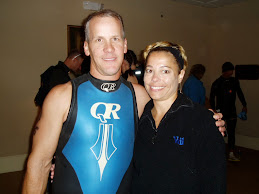


 Posts
Posts